
The story is classic. The main character enjoys prominence and prestige only to sink into obscurity before slowly rising again. Mark Noll tells this tale in his benchmark book on the history of American evangelical scholarship (1880-1980), Between Faith and Criticism–a book full of insights which still bear fruit today.
 Some reasons for the decline are well-known but Noll adds other significant factors. One is the professionalization of academic study beginning in the late nineteenth century. Biblical studies were no longer the exclusive domain of denominational seminaries but became ruled by the technical, research-oriented graduate schools of major universities. In such an environment, assumptions of faith were thought to taint academic pursuits.
Though scholars like A. A. Hodge and B. B. Warfield at Princeton had the stature and substance to maintain some degree of standing in the field, shortly after 1900 such influence hit bottom. The next generation was one of exclusion and retrenchment, highlighted by the writing of The Fundamentals and the highly publicized Scopes Monkey Trial.
The issue which most divided evangelicals from modern or “liberal” scholars and vice versa, was biblical criticism. Noll, assuming his audience knows the term, never defines it (also called higher criticism) which does not mean negative evaluations. Rather it concerns a range of “scientific” approaches (which gained prominence in the nineteenth century) for analyzing texts to determine their meaning and historical accuracy. Many evangelicals objected to conclusions from these methods which included, for example, doubting Mosaic authorship of the Pentateuch and assigning a second-century BC date to Daniel. The result, they often felt, called the authority, infallibility, and inerrancy of Scripture into question.
How evangelical scholarship pulled itself out of these doldrums takes us to Britain. First, as members of the established Anglican church, some evangelicals there were always part of the faculty at the elite universities. They were never excluded the way their American counterparts were. Second, through the work of what became Tyndale House and Tyndale Fellowship (both under the umbrella of the InterVarsity Fellowship student ministry), serious scholars and scholarship were nurtured and encouraged. These included F. F. Bruce, G. T. Manley and others.
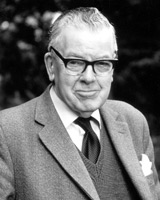 Via publications and some transatlantic travel both ways, the Brits had a salutary effect on American scholarship. Of ten evangelical commentary series available in the early 1980s, only one had a majority of American contributors.
Noll also offers a taxonomy of evangelical scholarship that is still useful thirty years after his book was published. (1) Critical Anti-Critics “regularly put scholarship to use in defending traditional evangelical beliefs and in attacking the nontraditional conclusions of other scholars.” (2) Believing Critics (led by British scholars) accept that new research may overturn traditional beliefs but that this need not undermine an inspired Bible. They “find insight as well as error in the larger world of biblical scholarship” (p. 158). Generally, then as today, members of the Evangelical Theological Society (ETS) are in the first category while members of the Institute of Biblical Research (IBR) are in the second.
Ultimately, the challenge for evangelicals has been to develop a comprehensive method for understanding both the divine and human aspects of Scripture. Do minor errors or a failure on the part of the biblical writers to (anachronistically) follow 21st-century historiographical conventions call the reliability of the whole Bible into question? Do the fallen and finite human contexts, cultures, and origins of the Scriptures somehow negate their divine inspiration and authority? Or is there a way both can be affirmed? In answering these questions, our British brethren have led and continue to lead the way.
F. F. Bruce photo credit: InterVarsity Press
 The emphasis on conversionism has had another effect. It has made evangelicals more individualistic than Catholics, who are oriented more toward the community of faith as a primary means for drawing closer to God. Certainly American individualism has had a tremendous impact on American Catholicism as well. American Catholics are much more willing, as mentioned earlier, to disagree with and act contrary to the Church’s teachings than Catholics in many other countries. Nonetheless, when it comes to spirituality, it is primarily a matter of the community.
 I said, “The Road to Emmaus is a paradigm of Catholic spirituality, right? Spiritual growth is a journey that we go on. And Christ travels with us on this journey even though we may not know he is there. But we recognize him in the breaking of the bread, in the Eucharist. And our immediate instinct at such times of significant encounter with Christ is to go to the community, just as the two on the Road to Emmaus did. So we have in this paradigm the key elements of the journey, the presence of Christ, the Eucharist and the community that make up much of Catholic spirituality.”2 He looked completely bored, as if I were telling him the sun rises in the east and sets in the west.
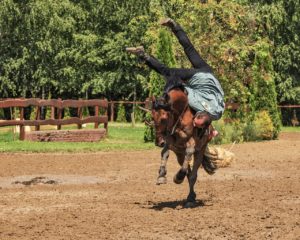 “Exactly. Spiritual growth happens in crisis events when we are suddenly thrust to a higher or deeper level of intimacy and commitment to Christ. From that moment we are radically changed. Spirituality proceeds dialectically. There is a radical discontinuity of the past from the future. Sometimes that moment is the crisis of conversion. Sometimes it is hearing a calling or some other new spiritual experience. So I think your Protestant friends may be expecting a Damascus Road experience.”
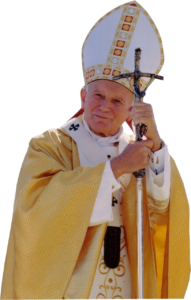 Catholics, by contrast, are very happy to think in terms of both/and. John Paul II was highly revered by Catholics, yet large majorities of Catholics (particularly in North America) felt perfectly at peace disagreeing with him on birth control, priestly celibacy and stem cell research. The inconsistency bothers them little.
 For evangelicals, the game is thought to be won or lost on statements. If we can’t have fixed truth expressed in words, we are subject to every wind of doctrine. We lack an anchor and may drift into heresy or at least into the shoals of liberalism. While Catholics lean toward analogical thinking, Evangelicals tend to embrace what Tracy calls the dialectical imagination. Since we have a tendency to deceive ourselves, we seek certainty. Symbols are too vague to achieve this. Propositions warn us clearly against error, set limits and call us back to truth.
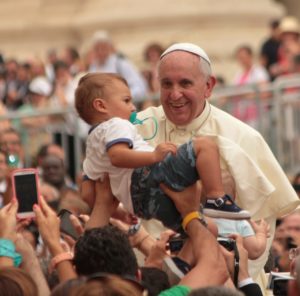 It could only have been someone with God’s sense of humor who had brought us together. But we both loved Jesus and each other, and assumed that was enough.
 For Catholics, it was not the document at all that was primary. It was the community, the people of God, the unity of the people of God. If signing the document could help preserve that unity, by all means, sign it—and then do what your conscience requires.
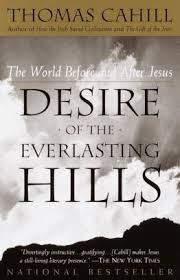
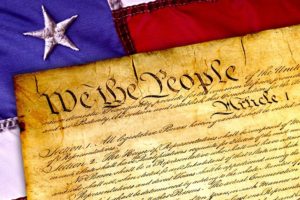 What of the initial question that inspired the book? He only hints at answers. Certainly the crucified image of the righteous sufferer has remained strong, inspiring many to follow his example even at great risk. Also, it is hard to imagine the Bill of Rights and the United Nations Universal Declaration of Human Rights emerging without the widespread influence of Jesus. “The pressure to make peace [in various quarters of today’s world] is quite unlike anything the Greeks or Romans or even the Elizabethans could have imagined” (310).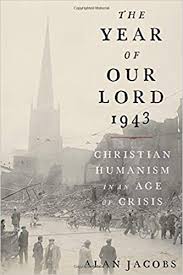
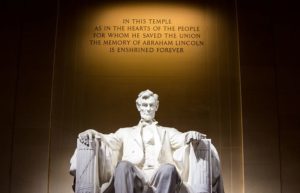 The unwritten agenda of this book and its relevance for today seems to be the similar questions that are now afoot. Does democracy have a future? Can it withstand the impulses of our now hyper technological society joined with the forces of nationalism which once more assert themselves–now in currently democratic societies like Great Britain, India, the United States and elsewhere? What role if any does Christianity have to play other than chaplain to the powers or hand-wringing bystander?
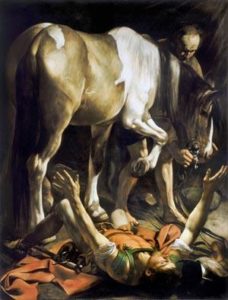 There was no horse. Acts 9 doesn’t mention it. What about the other two times in Acts that Paul tells his story of meeting Jesus? No horse. Maybe it’s in one of Paul’s letters where he gives a bit of his life story? Sorry. No horse. Even reputable writers like Thomas Cahill perpetuate the myth.*
 Freakonomist Steven Levitt tells us just