
Seriously? Give away the ending? Don’t writers want to keep readers guessing? Don’t you want an amazing plot twist at the very end that no one saw coming?
OK, sure, sometimes. But giving away the ending at the very beginning can also be an effective to keep readers reading. Let me give you a couple of examples.
Jeannette Walls begins The Glass Castle, her memoir of growing up in Arizona and West Virginia, this way.
I was sitting in a taxi wondering if I had overdressed for the evening, when I looked out the window and saw Mom rooting through a Dumpster. . . . Mom stood fifteen feet away. She had tied rags around her shoulders to keep out the spring chill and was picking through the trash while her dog, black-and-white terrier mix, played at her feet. . . . To the people walking by, she probably looked like any of the thousands of homeless people in New York City. . . .
It had been months since I laid eyes on Mom, and when she looked up, I was overcome with panic that she’d see me and call out my name, and that someone on the way to the same party with spot us together and Mom would introduce herself in my secret would be out.
I slid down in the seat and asked the driver to turn around and take me home to Park Avenue.
In just one page I was totally hooked. How did her mother end up homeless while Walls was living on Park Avenue? Why did she have such a strong reaction to seeing her mom? Did Walls know her mom was in the same city? Had she tried to help her before?
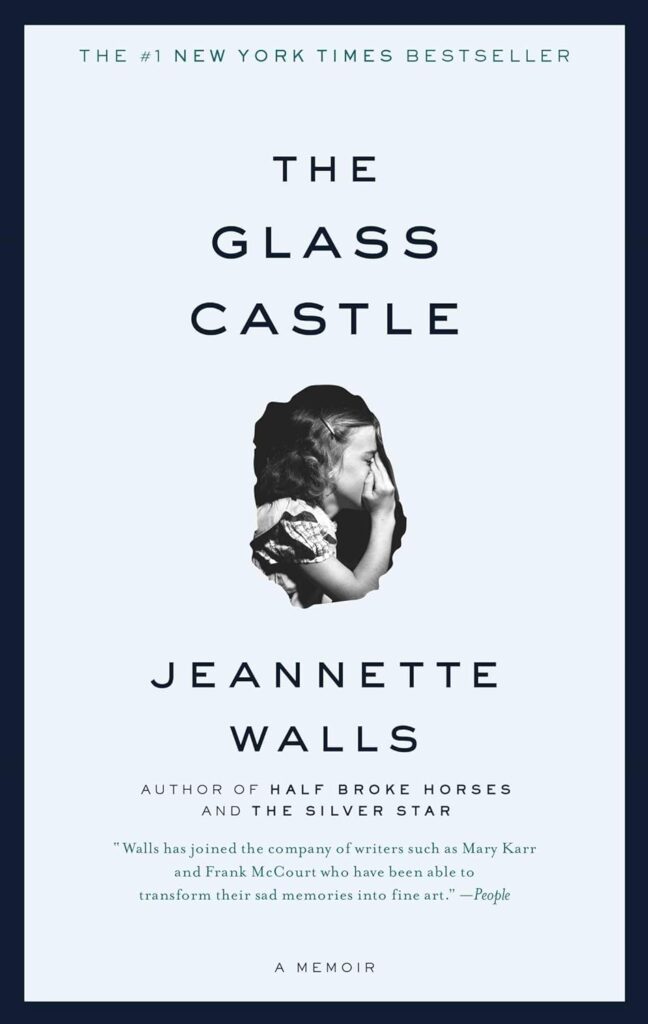
Because I wanted to know all those answers, I devoured the 280-page book which then tells the startling story of Walls early childhood and teen years. By giving away the ending, Walls had created a compelling narrative question (also called a story question, a central dramatic question, or the narrative drive). We tell readers how the book will end, but we leave the mystery unanswered about how one could possibly get from Point A to Point B.
Recently I was with a friend who wanted to write a book about his dad. For a half hour he related various disjointed episodes and aspects of his dad’s life. Eventually he said, “I wouldn’t be a Christian today if my dad hadn’t been a drug dealer.”
I nearly jumped out of my chair and said, “That’s your first line!”
By giving away the ending, we can create compelling reading.
You kept going to the end after I gave away my point in the title of this blog, didn’t you?

Thank you for this excellent reminder, Andy. I found this “upside down rule” to be relevant for nonnarrative writing as well. It was an important and difficult lesson for me a few years ago when I was writing an exposé about English Bible translations designed to strip away common misperceptions. I thought I would methodically present compelling evidence that would eventually lead the reader to some surprising conclusions. But I realized that no one would wade through all that evidence not knowing where they were going. So, I spelled out the conclusions first and then used the evidence to prove them. Even though it seemed counterintuitive to me at the time, I believe many readers found the evidence and conclusions just as surprising as they would have if I had kept them guessing. If I hadn’t applied this “upside down rule,” most readers never would have made it all the way to the conclusions.