
A Lenten Reflection
In typography, when we straighten lines on both sides of a column of text we say it is justified. This gives a clean appearance so readers are not distracted by jagged edges. Readers can then focus on the words, not on how they look.
 Jagged edges appear elsewhere too. A family member gets ill. We feel betrayed by a friend. Someone rear ends us. These and more pile up till we snap back harshly at those we love most. We fail to live up to our own standards of honesty, loyalty, charity.
We also need to be justified. Our lives need to be straightened and aligned with God. As Fleming Rutledge notes in The Crucifixion, the English words justify, justification, righteous, righteousness are all from the same word group in Greek.
-
“Righteousness” does not mean moral perfection. It is not a distant, forbidding characteristic of God that humans are supposed to try to emulate or imitate; there is no good news in that. Instead, the righteousness of God is God’s powerful activity of making right what is wrong in the world. (author’s emphasis)
This activity involves our individual lives but also much more. Our broken world needs to be justified as well, a world in which justice is too often perverted.
-
When we read, in both Old and New Testaments, that God is righteous, we are to understand that God is at work in his creation doing right. He is overcoming evil, delivering the oppressed, raising the poor from the dust, vindicating the voiceless victims who have had no one to defend them. (328)
 The verb Rutledge frequently uses in her book to convey this action which justifies and makes righteous is to rectify. The world and all of us in it need to be rectified, to be set right.
As we enter Lent this Ash Wednesday, we remember that while we have been rectified in Christ, we are also still in the process of being rectified. We live in the already of Christ’s finished work, knowing that sin in ourselves and our world show that his blessings have not yet flowed as far the curse is found.
As he rectifies us now, we hold in that grace the hope that one day all will be set right.
—
Image credit: Free-Photos Pixabay (woodtype); 41joseatortosa Pixabay (hillside)

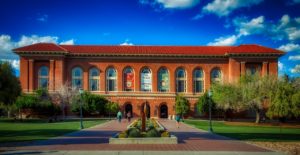 Yes, I succeeded in college but I could only go because my parents valued it, could afford it, and sent me. And that was possible only because in the last two hundred years their parents or great grandparents journeyed from Western and Eastern Europe to a country where college was possible for and valued by people like them. They avoided two major wars that ravaged their populations and came to a country that was expanding economically.
 I don’t have to be threatened by new viewpoints or people who disagree with me because I know most of who I am came from others to begin with. Surprisingly, gratitude has thus taken me on a journey of listening and of learning new things—yes, of even learning I was wrong.
 In his opening to The Second Mountain, David Brooks says he is correcting his previous book, The Road to Character. I think, however, the two are simply companion volumes. While the earlier book focuses on the valid and important work of character development that each of us is responsible for, Brooks’s newest book highlights the importance of community for who we are.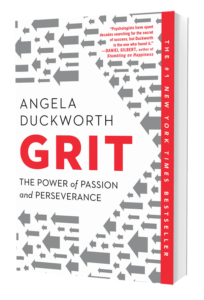
 Duckworth gives a nod to the fact (as research shows) that our environment (society, family, culture) can profoundly affect our grit. The culture of Finland, as one example, can train a whole country to be tough in adversity. So grit is not merely a matter of pulling oneself up.
 The second part of the book looks at practices we can engage in to break or disrupt these forces—personally, as a church, and as we interact with culture. These are not suggestions for evangelism as we might typically think of them. They are more like spiritual disciplines to reorient our own lives before (or as) we engage with those outside God’s family. I could wish for more here, but Noble gives us a necessary beginning.
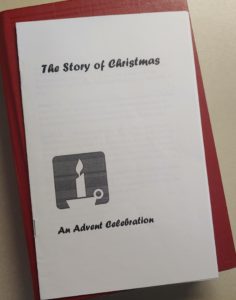 Once each December we have invited about twenty friends, neighbors, coworkers, and their children to our home for an evening. Since usually they don’t all know each other, we take a few minutes for everyone to introduce themselves and how they are connected to our household.
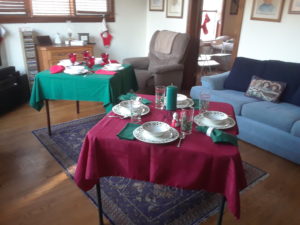 In the middle we pause to let people share Christmas or holiday memories and what it all means to them. Some talk about family traditions and some about their faith experiences. The evening closes with dessert and coffee, sharing cookies and other treats that our friends have brought.
 When we firmly, completely, uncompromisingly put our trust in a particular way of viewing the Bible, ironically we put ourselves at risk of disbelief. Why? Because if one brick of the structure we have built crumbles, then the whole edifice falls.