Some use the Bible as a grab bag of advice. Just pluck its timeless truths at will from the page and paste them on to our lives. Though there is much wisdom in the Scriptures, we are misguided to approach the Bible as a handbook or a user’s manual for life. Why? Because that’s not how it was originally written.
That may seem rather obvious for Biblical narratives where the point of a story may not be transparent. But it can even be true of a book like Proverbs, which seems on the surface to be just that—a collection of unconnected bits of practical instruction.
Consider these back-to-back verses in which we are told we should not answer a fool and that we should answer a fool. Here they are:

Do not answer a fool according to his folly,
or you yourself will be just like him.
Answer a fool according to his folly,
or he will be wise in his own eyes. (Proverbs 26:4-5)
What the heck is going on? Can’t the writer make up his mind?
It’s similar when it comes to money. We are told on the one hand to be very determined to work hard and avoid poverty (Proverbs 6:9-11; 10:4) and on the other hand to make sure we don’t trust in money (Proverbs 11:28; 23:4). So which is it—don’t focus on money or focus a lot on money?
Proverbs falls into an ancient genre called wisdom literature. Such writings offer insights for successful living—but in that genre such insights are not presented as hard-and-fast rules. They are often true, generally true, but not always true. They can’t be because they can’t anticipate every single possible situation.
Wisdom literature wants to get us to think. It encourages us to mediate long and hard on its sometimes opposing principles, under the guidance of the Spirit. The purpose of such meditation is to discern how to apply them in the particular situation we are in.
When confronting a fool, one size does not fit all. When dealing with money, sometimes we need to be conscientious earn it and sometimes be free to give it away. Which is it? It depends. Maybe it’s both. We can discern which approach to take with input from our community and from the Spirit. That’s the point of wisdom literature—to encourage us to depend on God, to fear the Lord.
In an age of intense relativism, of so many uncertainties in life, we yearn for assurance, for someone to tell us with absolute authority that one way is totally right and that another way is totally wrong. But the writers of the Bible knew that life is complex. God expects us to deal with gray areas as people who will grow in maturity and in wise decision making that will ultimately reflect his character.
—

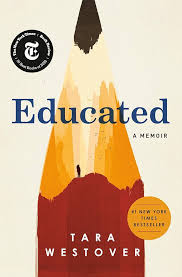
 Psalms is a different book with a different context—one aspect of which is that of bringing all our emotions, concerns, praise, frustrations, thanksgiving, and sorrows to God in worship. In fact, more than a third of all psalms are laments, more than any other type of psalm.

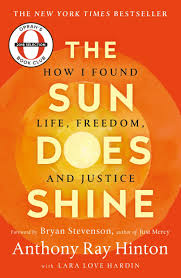
 Because the New Testament writers were people steeped in the Old Testament, that’s where they often drew ideas, motifs, and references to understand this surprising Jesus who was not the military Messiah they expected. The language of “passing by” recalls the story in Exodus 32–33 when Moses asked God to see his glory. God says, “When my glory passes by, I will put you in a cleft in the rock and cover you with my hand until I have passed by” (Exodus 33:22, my emphasis).