We’ve all been wrong.
I grew up thinking you cooked vegetables on the stove top. Then I was introduced to roasting them in the oven with a little olive oil, sea salt, and cracked pepper. It was a revelation!
I used to think I was the only one who knew how to raise kids. Then I saw many other wonderful parents using very different approaches. Who knew there were lots of kinds of secret sauce!
Knowing how often we’ve all been wrong, you’d think we’d be less reluctant to change our minds. Why do we then so often dig in our heals, discounting contrary evidence?
Adam Grant in Think Again suggests one reason can be our frame of mind. When we are locked into a cycle of pride, conviction, and confirmation bias, we are likely to learn little and grow little.
 Grant believes that we will be better off if we think more like scientists (but he’s willing to reconsider!). They actually get excited when they find out they are wrong because this means they may have discovered something new. By realizing they were wrong, scientists in the 20th century alone have discovered vitamins, cosmic rays, insulin, atomic nuclei, the polio vaccine, quasars, and much more.*
How did they do that? The best scientists cultivate attitudes of confident humility, doubt, and curiosity. (Interestingly, these are the same qualities that can help us persuade others more effectively—in Part Two of Grant’s book discussed here previously.)
Another barrier to creative rethinking can be a false dichotomy, like my parenting example above. We are better off assuming there are many possible answers to a question we could be explore–not just two. A simple answer can be more comforting, but a complex, nuanced idea (while perhaps harder to deal with) may be more accurate and more helpful.
For teachers and managers, Grant also explores in two separate chapters how students can be taught to constructively rethink information they receive, and how businesses can break out of comfortable but stale processes.
Am I always right? No. Are you? No again. So why not rethink?
—
*”Chronology of twentieth-century science,” https://press.uchicago.edu/Misc/Chicago/284158.html
 The most effective negotiators and debaters, as described by Adam Grant in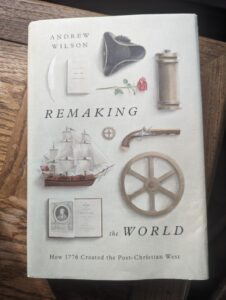
 Wilson closes with three Christian themes from the 1770s to help navigate the weird world that decade has bestowed on us.
 My grandson was reading
 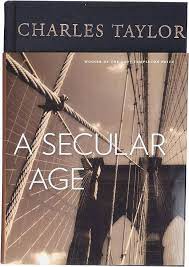 Finally, I pay attention to books that are referenced in more than one book I’ve read. The one that has risen to the top in recent years is A Secular Age by Charles Taylor. The book came out in 2007, and I have read a half dozen different books which make major use of Taylor’s framework and ideas. I confess that I have delayed diving into it because it is almost 900 pages and probably not the easiest read. But I think the time has come.
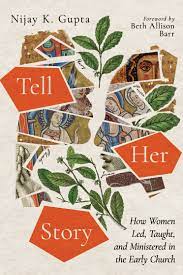
 Take what Paul says in his letter to the Galatians, for example. It’s a well-known verse often referenced in these discussions. “There is neither Jew nor Gentile, neither slave nor free, nor is there male and female, for you are all one in Christ Jesus” (Gal 3:28). This comes in the middle of a letter that is about making sure Gentiles are treated as full members in the body of Christ, not as second-class Christians. Law shouldn’t divide us, Paul says. Rather grace should unite us.
 Paul’s passionate argument in Galatians calls on all of us to seriously ask questions such as, “How can we all proactively do more? What can we do to make sure that the women in our congregation are growing in Christ, learning more of his grace, growing in their love for God and others? Are there practical changes we can implement that will aid and encourage all groups (but especially those who may be sidelined, because that is Paul’s point) to more fully use their gifts for the building up of the body of Christ? How can we make sure the talents, experiences, and opinions of women are appreciated, that their dignity as people in the image of Christ is affirmed? In this context, how can we look to the interests of others first rather than our own (Phil 2:3-4)?”


 The word evangelical has a long history, going back about three hundred years in England to describe a movement intended to revive the token Christianity that was widespread at the time. In the mid-twentieth century, Billy Graham (who welcomed Catholics and African Americans) adopted the label to distinguish himself from fundamentalists. This latter group emerged in the early twentieth century, coming to national attention with the Scopes Monkey Trial of 1925. They believed the Bible was literal and inerrant, were doctrinally conservative, anti-science, and separated themselves from mainstream culture as well as from any believers who didn’t agree with them.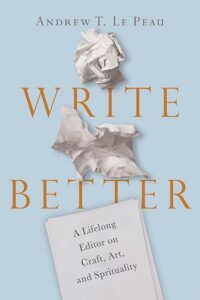
 We could say something like, “But then I began to find evidence that contradicted my initial ideas.” Or, “I was stunned! Could I have been wrong about how beneficial intuition is?”