
Persuasion is a lost art. Persuasion means we respect the dignity and value of people we disagree with. Persuasion, if it is honest, means we ourselves are open to new ideas, new information, and are willing to adjust our previous conclusions. Persuasion is a win-win for us and society. And, sadly, we see too little of it in a world that favors screaming at and insulting opponents.
For that reason, I was looking forward to Anand Giridharadas’s The Persuaders. And I got a little of that, but not as much as I hoped. If you are looking for a balanced book that considers what we could learn positively from both right and left—you won’t find it here.
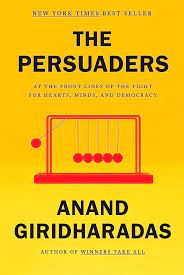 Instead The Persuaders reports on some of the different approaches left-leaning strategists, activists, and legislators have been using recently to shift the thinking of voters. Each chapter focuses on one or two key people, such as Bernie Sanders, Alexandria Ocasio-Cortez, and others. And we find some interesting approaches described which depart from less than successful practices of the past.
The book is strong on reporting but is weak on analysis. As a journalist, Giridharadas largely chronicles the work, words, and methods of public figures he admires. He doesn’t offer much insight. I appreciate books that tell stories to illustrate their content. Narratives help drive home in concrete ways what can be abstract principles. But this book does the reverse—it illustrates stories with a smattering of principles. And that is usually much less effective because the point can get lost in the midst of a long tale.
 Often I am annoyed by reviews that say, I don’t like this book because the author didn’t write it the way I would have. And there may be some of that in my critique. But the book could have been so much better (more persuasive?) if the author had taken longer to write it, thought more deeply about the nature of persuasion, and guided us more concretely on how the character of our national discussions needs to change to preserve and enhance civility and democracy.
I am sympathetic to many of the viewpoints he highlights. I know the author wants us to be better, wants the American dream to be accessible to more and more Americans rather than fewer and fewer. But he might have included more thoughtful synthesis and a wider range of voices who all want us all to move forward together.
Having said all that, two chapters are particularly worthwhile, and I’ll talk about those more in my next Andy Unedited.
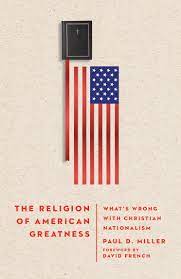
 Miller argues that nationalism does not create national unity, as its proponents contend. Rather Christian nationalism still has anti-democratic, illiberal tendencies, especially in how it treats ethnic and religious minorities. “Nationalism is the identity politics of the majority tribe. . . . It perpetuates the cycle of political warfare between nationalist majorities and identity-group minorities, each side . . . trying to seize state power and milk it for perks for their tribe” (p. 108).
 What about this: “Scientific models don’t perfectly match observations so they can’t be relied on.” Which FLICC is this? You probably got this right away—it’s impossible expectations which demand unrealistic standards of certainty.
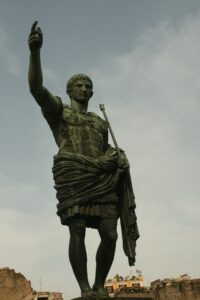 Jesus submitted to a Roman trial when he could have used his power (that is, he could have used violence) to stop it. He didn’t. Nonetheless, he refused to accept Rome’s authority as ultimate. God was the source of whatever authority the government had. While the government could act contrary to God, it was nonetheless responsible for its misdeeds and for failing to provide justice for the weak and oppressed.
 While the differences in Bible versions can be confusing, it’s important to remember the advantages. It means we have a variety of translations well suited for different purposes–some for public reading, some for study, and others for devotional reading. In addition, if we come across phrases like “holy kiss,” “with . . . a double heart,” “make their ears heavy”—we may be left a bit befuddled. By comparing different translations, we can sometimes get a better sense of the range of meanings in a text. 40 Questions charts dozens of translations along a continuum to show how they each wrestle with the balance of accuracy and readability in different ways.


 My friends were somewhat surprised at this. They thought the text said what it meant. No more oceans.
 Carmen Joy Imes, in
  Another traumatic event came in fifth grade. The teacher had us all stand around the perimeter of the room for a spelling bee. Somehow I was confident I would be standing a long time. My first word was swimming, and I knew I’d nail it. Only I spelled it with just one m, and in disappointment and shame I was told to sit down. I was stunned. How could that not be the right spelling ? To this day, I still wonder if that extra m is really necessary. Would anyone seriously be tempted to pronounce swiming with a long i?
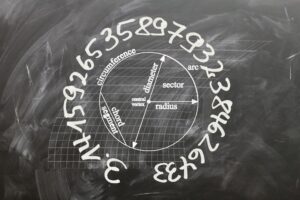 Is there a virtue in being a good speller for its own sake? I’m not sure. Is there value in memorizing the number pi to a hundred digits? Certainly as mental exercise. Perhaps not much more.