
For decades I have loved, reread, recommended, and extolled William Zinsser’s On Writing Well. He is wise, practical, enjoyable to read, and absolutely on target for new and experienced writers.
While I have been dispensing writing advice for decades (to authors, in lectures, in writing), when I thought about doing a book on writing myself, I was met with two thoughts—neither encouraging. First, how could I possibly say anything better than Zinsser when he says so much so well? Second, what would I possibly put in a book that Zinsser doesn’t already cover? Was anything left to say?
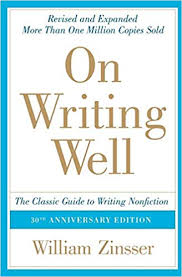 Most other books on writing fell into one of two categories. Either they were memoirs of famous writers with a few writing tips sprinkled here and there, or they were detailed guides to punctuation, grammar, word usage and so forth. While both sorts of books can be helpful, what I appreciated about Zinsser was his middle path of providing principles. His advice was concrete enough to put into practice but general enough to be broadly applicable. That’s the kind of book I also wanted to write—if I could.
I began by making a list of possible topics. Soon I saw they fell roughly into the three categories of craft, art, and spirituality. Half of Zinsser deals with craft but he says almost nothing about the other two. What he writes in that first part about simplicity, clutter, words, and usage is unsurpassed. So I focused on topics he doesn’t cover such as structure, persuasion, narrative in nonfiction, titles, and more. While he also addresses openings, endings, and audience, I took a different but complementary approach.
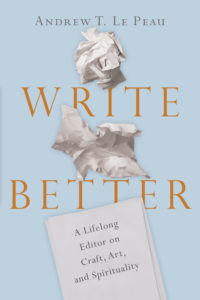 The last two-thirds of what would become Write Better would clearly be distinct. My five chapters on art consider the nature and practice of creativity, the value of breaking the rules of writing, the significance of tone, the glories of metaphor, and how saying less leaves room for art.
Zinsser had a Protestant upbringing and actually edited a book called Spiritual Quests. But he wrote little on the topic. In his final edition of On Writing Well, he considers the attitudes authors have toward their work—regarding voice, enjoyment, fear, and so forth. I consider some of these topics and many others in my final part on spirituality and writing, but within an explicitly Christian framework.
Something else I could offer that many writing books don’t include is a window into the mysterious world of publishing. Several appendices pull back the veil a bit on this realm of intense interest to writers.
I still recommend Zinsser. My aim is for Write Better to join him in the underpopulated category of principle-based books on writing.
 The second part of the book looks at practices we can engage in to break or disrupt these forces—personally, as a church, and as we interact with culture. These are not suggestions for evangelism as we might typically think of them. They are more like spiritual disciplines to reorient our own lives before (or as) we engage with those outside God’s family. I could wish for more here, but Noble gives us a necessary beginning.
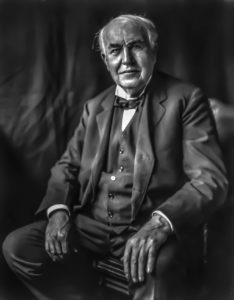 And how do original thinkers work? From Beethoven to Edison to Picasso they outproduced their peers. Each is famous for several works of genius. What is little known is the thousands of works they generated that are forgotten. Producing so much in quantity increased their odds that a few would be landmark creations.
 The author’s definition of an original as someone who is different or inventive is not much more than a tautology. He would have been better off to concretely define creativity as combining two things or ideas which hadn’t been joined before or by combining them in a new way.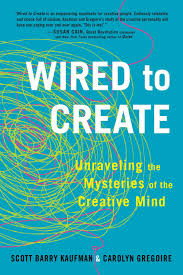
 Creativity is not just a moment, however. The authors say it can take weeks, months or years to work out an idea. Creativity requires perseverance and follow through to see if the idea can become reality. That’s Wallas’s fourth stage (verification).
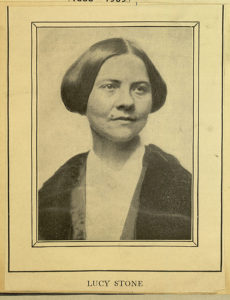 Lucy Stone launched the women’s rights movement in 1851, inspiring thousands to join the cause for women’s right to vote, work, receive an education, and own property. Susan B. Anthony and Elizabeth Cady Stanton were among her early followers. But after years of leading together, in 1869 Anthony and Stanton split from Stone, nearly causing the collapse of the movement. What happened?
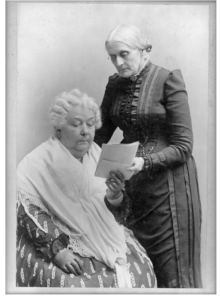 Anthony and Stanton were scandalized. But their differences didn’t stop there. “Stone was committed to campaigning at the state level; Anthony and Stanton wanted a federal constitutional amendment. Stone involved men in her organization; Anthony and Stanton favored an exclusively female membership. Stone sought to inspire change through speaking and meetings; Anthony and Stanton were more confrontational, with Anthony voting illegally and encouraging other women to follow suit.” (121)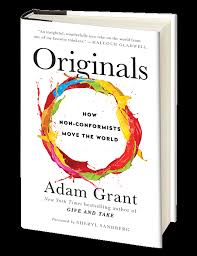
 Grant hooks us by putting two mysteries in front of us which we actively try to solve ourselves before the author reveals the answers. But he doesn’t stop there.
 Once each December we have invited about twenty friends, neighbors, coworkers, and their children to our home for an evening. Since usually they don’t all know each other, we take a few minutes for everyone to introduce themselves and how they are connected to our household.
 In the middle we pause to let people share Christmas or holiday memories and what it all means to them. Some talk about family traditions and some about their faith experiences. The evening closes with dessert and coffee, sharing cookies and other treats that our friends have brought.
 Secure endorsements from people who already have platforms. Then present those along with your proposal. These can be previously published authors, well-known speakers or bloggers, leaders in organizations related to the topic of your book, or professors at seminaries or colleges. If you know people like that, ask them to read your manuscript or proposal with an eye toward possibly offering a two- or three-sentence commendation should they find it worthwhile.
  Once I received a proposal from a professor of New Testament I had never heard of who worked at a small seminary I had never heard of. In the proposal he claimed to have solved a significant and long-standing problem in the interpretation of the Bible. I thought his proposal was way overconfident, that he was all too certain of the revolutionary nature of his idea. I was ready to turn it down.
 Sometimes I’d run from one part of the course to another, taking a shortcut, so that several times during a race I could yell encouragement to press on, to not let down, to remember their training. Once when I was dashing from one place to another, a student cheering for another school almost slammed into me. As he flew by in another direction, he said, “Sorry, Coach.” I’ve never felt prouder to be mistakenly identified.
 Responses in both parts should be specific (an apt word choice or metaphor, an aspect of structure, a strong illustration, a good use of building drama, etc.). “Something I thought was strong was . . .” is a good way to begin.
  Certainly gray lines can appear when it comes to, for example, “Was the writing persuasively argued?” That can lead to comments like, “Well, I wasn’t persuaded because I think X.” Soon we are diving into the deep waters of content.