When Phyllis and I got engaged, I found out just how different Catholics and Protestants were.
I had been raised Catholic, served as an altar boy, ate fish on Friday, said the rosary, memorized the catechism, prayed the Stations of the Cross, sang Gregorian Chant in the choir, and had twelve years of Catholic education that straddled the pre- and post-Vatican II eras.
Phyllis was raised in a congregation that was part of the Independent Fundamental Churches of America. Even her fellow churchgoers joked about the separatistic tendencies of the IFCA by saying it stood for “I Fight Christians Anywhere” or “I Fellowship Completely Alone.” She grew up singing gospel songs, going to Bible camps, and quizzing (which is, near as I can tell, a national network of teams of high school students in a series of competitions who respond to questions requiring contestants to have massive amounts of Scripture memorized).
 It could only have been someone with God’s sense of humor who had brought us together. But we both loved Jesus and each other, and assumed that was enough.
I knew well, of course, that Catholics and Protestants disagreed on many issues—the authority of the pope, the nature of the church, the role of the sacraments, the place of tradition and Scripture. So we faced quite a question when it came to choosing a church. At first we thought we’d have plenty of time. We thought we would affirm both traditions in our wedding and sought to have a co-officiated service, led by a Catholic priest and a Presbyterian pastor we knew. Both were happy with the idea. Our friend, Father Pendergast, told us that maybe God was calling us to be “bridge people” between these two worlds. He thought that could be a wonderful role for us on our spiritual journey. All that was left before setting out on this pilgrimage was to sign this little document for the Church that said we would raise our kids Catholic. Then we could be on our way.
As well versed as I was in all things Catholic, this came as a surprise to me. Of course, when two Catholics marry, nothing like that is needed. But in a “mixed” marriage, it was. And here is where I began to find out that Catholics and Protestants were even more different than I thought.
When we sought counsel from a wide variety of friends and mentors, the Protestant evangelicals consistently said, “You can’t sign that. That is a huge promise you are making. To do so is to commit yourself to the Church and everything it teaches. Do you really believe everything it says?”
The Catholics were also generally consistent, saying something like, “Don’t worry about the details. Go ahead and sign it! It just means you will raise your kids as Christians, following your conscience as God leads you. And if he leads you to a different church later, no problem.”
Well, I exaggerate these two reactions a bit (but only a bit) to make a point. For Protestants, the document was a fixed text. And to sign it was to irrevocably align ourselves with that text. What mattered were the propositions, the statements. They defined reality. They were reality.
 For Catholics, it was not the document at all that was primary. It was the community, the people of God, the unity of the people of God. If signing the document could help preserve that unity, by all means, sign it—and then do what your conscience requires.
So often the division between Catholics and Protestants is cast in doctrinal or ecclesiastical terms. And those are significant and real. But more than that, here were two very different ways of thinking, two different mental maps, two different ways of understanding the world and living in it.
This experience launched me on a journey of trying to comprehend why Catholics and Protestants not only disagree but very often lack a rudimentary understanding of each other and talk past each other, each seeming to fail to grasp even basic points the other is making. Why else would it have taken Catholics and Lutherans five hundred years to finally figure out that they actually agreed on justification by faith?
This article was originally published in Books & Culture, March/April 2010, pp. 33-35. I am serializing it here for the first time in four parts.
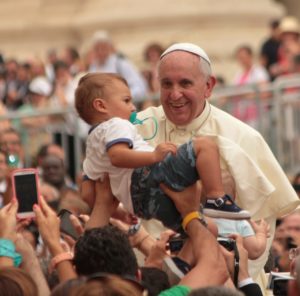
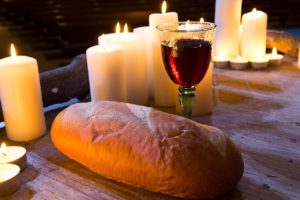
photo credits: pixabay–706341 (Pope Francis); Bouf16 (bread and wine)
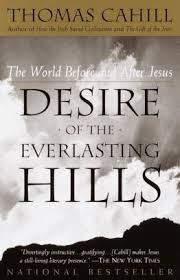
 What of the initial question that inspired the book? He only hints at answers. Certainly the crucified image of the righteous sufferer has remained strong, inspiring many to follow his example even at great risk. Also, it is hard to imagine the Bill of Rights and the United Nations Universal Declaration of Human Rights emerging without the widespread influence of Jesus. “The pressure to make peace [in various quarters of today’s world] is quite unlike anything the Greeks or Romans or even the Elizabethans could have imagined” (310).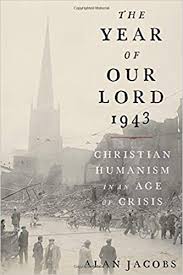
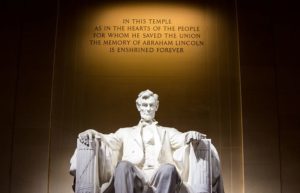 The unwritten agenda of this book and its relevance for today seems to be the similar questions that are now afoot. Does democracy have a future? Can it withstand the impulses of our now hyper technological society joined with the forces of nationalism which once more assert themselves–now in currently democratic societies like Great Britain, India, the United States and elsewhere? What role if any does Christianity have to play other than chaplain to the powers or hand-wringing bystander?
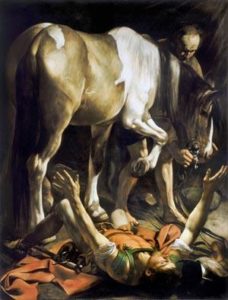 There was no horse. Acts 9 doesn’t mention it. What about the other two times in Acts that Paul tells his story of meeting Jesus? No horse. Maybe it’s in one of Paul’s letters where he gives a bit of his life story? Sorry. No horse. Even reputable writers like Thomas Cahill perpetuate the myth.*
 Freakonomist Steven Levitt tells us just