
For those like me who are steeped in Western individualism, the honor-shame dynamics of the Bible are hiding in plain sight.
Honor abounds in the Bible as seen in words like glory, name, blessing, praise, clean, renown, glorify, beloved. Shame words are equally plentiful—ashamed, accursed, humiliation, wretched, forgotten, reproach, despised, mocking, crushed, reviled, cursed.
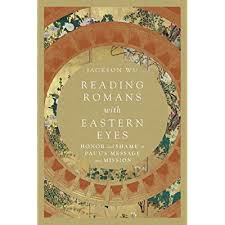 The dynamic of corporate identity comes to the fore in Scripture far more than many of us imagine. Jackson W.’s Reading Romans with Eastern Eyes (a series of essays that move through the letter chapter by chapter rather than a verse-by-verse commentary) does not seek to undo centuries of analysis in the Western tradition that emphasizes sin and guilt. Rather it seeks to place alongside that viewpoint another dimension that deepens our understanding of Paul’s most theological letter.
The author defines honor as “one’s perceived worth according to the agreed standards of a particular social context” (14) As such, honor can be achieved or ascribed. In the West we lay greater emphasis on the first. The East emphasizes the second. But we still see a number of honor/shame-oriented subgroups still thriving in Western culture—the military, street gangs, teenagers, sports teams, and rural communities. The fear of shame can effectively control the behavior of these members.
 God’s glory gets particular emphasis in this book. As the author says in his discussion of Romans 4:20-21, “Genuine faith in God magnifies his worth. By faith, we honor him” (48). In this vein Romans often focuses on how God deals with Jews and non-Jews, bringing them both into his family, to glorify him. A Jewish sense of superiority relegates God to a tribal deity. Therefore, “Romans contradicts the idea that ethnic conflict is a second-tier concern for the church” (65).
Just a couple other highlights. The author’s analysis of Romans 7 (famous for Paul’s use of first person—“What I want to do I do not do,” etc.) is of particular interest. He makes a strong case that this seemingly quintessential discussion of the individual instead “refers collectively to Israel during the exodus” (132).
Later the author critiques ancestor worship but also helps us sympathize with it by quoting Chesterton: “Tradition means giving a vote to the most obscure of all classes, our ancestors. It is the democracy of the dead. Tradition refuses to submit to the small and arrogant oligarchy of those who happen to be walking around.” Tradition can be good, but it does not eclipse God. He is the “Lord both of the living and the dead” (Rom 14:9).
This book does not dismantle everything we ever thought we knew about Romans. Rather it enriches our understanding of the letter by getting behind the honor-shame culture that infused the Bible’s world.
—
photo: Pixabay zgmorris13
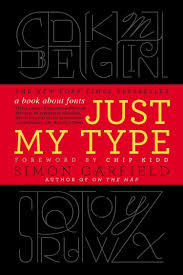
 And how could I have not known that the ampersand (&) is actually an elegant combination of the letters e and t which comprise the Latin word et, meaning “and”? I do now, & am a better person for it.
 I suddenly became acutely aware of people around me serving food, cleaning tables, maintaining equipment, and many more. Clearly, I thought, I have not appreciated such people enough or sufficiently expressed my thanks. They (along with other more obvious examples of first responders and medical staff) were putting their health on the line to serve me and others, to keep society functioning, even if it was at a reduced level.




 In his opening to The Second Mountain, David Brooks says he is correcting his previous book, The Road to Character. I think, however, the two are simply companion volumes. While the earlier book focuses on the valid and important work of character development that each of us is responsible for, Brooks’s newest book highlights the importance of community for who we are.

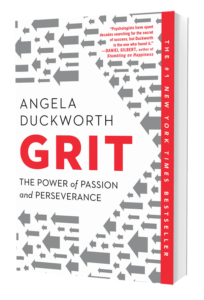
 Duckworth gives a nod to the fact (as research shows) that our environment (society, family, culture) can profoundly affect our grit. The culture of Finland, as one example, can train a whole country to be tough in adversity. So grit is not merely a matter of pulling oneself up.
 The second part of the book looks at practices we can engage in to break or disrupt these forces—personally, as a church, and as we interact with culture. These are not suggestions for evangelism as we might typically think of them. They are more like spiritual disciplines to reorient our own lives before (or as) we engage with those outside God’s family. I could wish for more here, but Noble gives us a necessary beginning.