Sometimes Jesus made statements that sound just plain crazy.
Once he was explaining why he taught in parables. The reason he gives in Mark 4:12 is this—so that, “they may be ever seeing but never perceiving, and ever hearing but never understanding; otherwise they might turn and be forgiven!” In quoting here from Isaiah 6, Jesus makes it sound like he doesn’t want people to repent, to turn to God, to be saved. What in the world could he possibly be talking about?
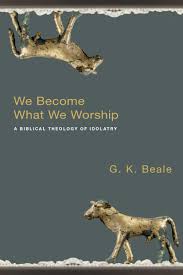 Greg Beale’s We Become What We Worship helps us untangle this mess while walking us through an important theme that spans both Testaments. The book of Isaiah condemns Israel for its idolatry, for worshiping statues that can’t speak or hear. Israel’s punishment? She was sentenced to become like the idols she worshiped—deaf and blind.
That theme is found also in Exodus, the Psalms, the Gospels, the writings of Paul and elsewhere. As Beale often summarizes in his book, we become like what we worship whether for ruin or renewal.
His analysis of the golden calf episode in Exodus is especially instructive. The rebellious people were described as being like a stubborn, “stiff-necked” heifer. The use of “stiff-necked” in Deuteronomy, Hosea and elsewhere is particularly connected with idolatry, not just general disobedience. They turned into what they worshiped.
 Yet our ruined state need not be permanent. Isaiah also tells us this condition will be reversed. A day is coming when “the deaf will hear the words of the scroll, and out of gloom and darkness the eyes of the blind will see” (Is 29:18). This theme is echoed through the New Testament as well. Yes, the punishment is intentional but not eternal. Its purpose is to get the attention of sinners so they do turn to God.
The whole of Isaiah is the context of Jesus’ statement about the people experiencing the same punishment of being blind and deaf that their ancestors suffered for their idolatry. The blindness caused by using parables was likewise intended to be temporary, not perpetual–a shock treatment to push his hearers back to their Lord.
Beale’s book makes the case that God created us essentially to be image bearers. If we do not reflect God, then we will inevitably reflect something else in creation (305).
What might even God’s people today be worshiping besides the true God? To find out, we can ask what we (individually or corporately) are like today. Are we focused on methods or message, on tradition or truth, on character or success, on winning or being winsome, on justice for the world or justice for me? What we give priority to matters. We’re choosing who we will be today and tomorrow.
—
image credit: Pixabay kryzoxstv
 I think the answer is a lesson in our tendency to take things out of context. Understanding what’s going on depends on seeing the whole sweep of the narrative in all thirty-six chapters of Numbers and the whole sweep of Psalms, not an isolated chapter or verse.
 Does it mean consciousness or self-consciousness? The ability to think and be rational? Perhaps creativity, since God is obviously being very creative in Genesis 1? Could it be our spiritual nature, the ability to relate to God?