Books are better sources of information and insight than tweets or headlines. Two years ago I reviewed here The Myth of Equality, a book that gives more help and understanding than anything you will hear or read in the news today.
Ken Wytsma was talking with a young man running his own landscaping firm who was proud of how he’d started from zero and succeeded by virtue of hard work, with no benefit from privilege. So Ken asked where he got most of his business (the suburbs) and where they worked on jobs (in backyards) and when (during the day) and how he got business (putting flyers on doors and knocking at houses).
Then Ken asked, “If you were a young black man proposing to work in the backyards of those suburbanites during the day when they’re not home, is it possible some of your clients might show a degree of suspicion or bias? If you were Hispanic, talked with an accent, or looked like you were from a culture unfamiliar to the suburban communities where people can afford backyard ponds and fountains, do you think it might–even if ever so slightly–affect how successful you are when you knock on doors?” The white friend understood.
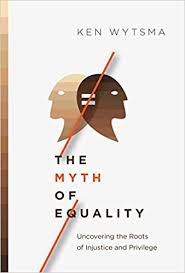
While equality is an American ideal, Ken Wytsma tells us, it is also an American myth. State-sponsored racist policies did not end with the abolishment of slavery. They have continued in various forms ever since.
As Wytsma recounts in The Myth of Equality, voting restrictions in the post-Reconstruction era reduced Alabama’s black voter turnout from 180,000 to 3,000. It fell to zero in Virginia and North Carolina. Today efforts continue to hinder voter registration.
Astonishingly, forced labor was widely reinstituted around the turn of the twentieth century with thousands of blacks arrested on minor charges and then leased back by the state to business owners. In fact, in Mississippi, “25 percent of convicts leased out for forced labor were children.”
Regarding housing, redlining in the North during most of the twentieth century reduced the value of minority real estate holdings, with contractual options to take their property away from them for missing one payment–something white buyers did not have to endure. The effects of this systematic impoverishment are with us still.
In the last fifty years, the war on drugs has targeted minority populations creating an incarceration-industrial complex. Things are beginning to change, but Wytsma finds it ironic that in Oregon, where marijuana is now legal, “white corporate businessmen now stand to make millions of dollars by selling a product that millions of men, predominantly of color, are currently incarcerated for possessing in miniscule amounts.”
 Does all this have anything to do with the gospel? Wytsma quotes Timothy Keller: “Any neglect shown to the needs of the members of the vulnerable is not called merely a lack of mercy or charity, but a violation of justice.” Biblical justice is not just punishing evil doers but restoring what was bent or broken. The cross doesn’t just allow sins to be forgiven but restores relationships. It reconciles us to God and us to each other.
Compassion for individuals is good and right, but it is only a component of justice which also looks to remedy underlying causes for such needs. Compassion, contends Wytsma, can also feed our hero complex. We encourage a more holistic justice when we use our influence and authority to give our responsibilities, opportunities, and power to those who have not had it equally.
Through a clear retelling of American history, a well-rounded discussion of biblical justice, and concrete ways we can move ahead individually and corporately, Wytsma provides an important book on an important topic.
Disclosure: I received a complimentary review copy of this book from the publisher. The opinions I have expressed are my own.

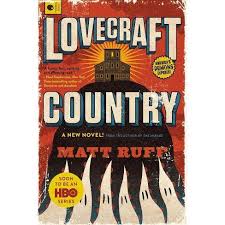 Set in Chicago in 1954, the novel follows a series of exploits of an extended family and their friends as they encounter mid-century racism while traveling, while trying to buy a house, and while trying to get jobs. These characters are very aware of the power dynamics at work around them, but they nonetheless act with resolve and creativity to achieve their ends. In ways these are classic underdogs—unlikely and under-resourced people who somehow manage to succeed.
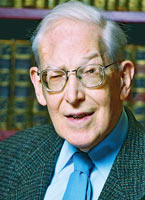 Once I recall him talking about his concise writing style. “Packer by name; packer by trade,” he responded. I could tell he enjoyed saying that, and I got the impression he used the line often.
 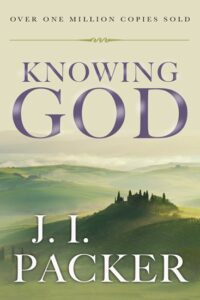 Once several of us took him to lunch, and as we ate IVP publisher Bob Fryling posed the question, “How would you describe IVP among the many Christian publishers that are around?”
 Such was the power of Coleridge’s personality and intellect that even in the midst of his deep struggles he reshaped the way the world saw Shakespeare in a series of landmark lectures. Previously the Bard was viewed as a second-tier talent of popular leanings. After Coleridge we know him to be the premier wielder of not only the English language but of art and life.
  You can probably rewrite 90% of these sentences in active voice. For example,
 Weak: The reason is because Facebook is trying to suck all the DNA out of my body.
 Since I tend to like history, science fiction, biblical studies, and literary fiction, I try to get people on my friends list who do too. At the same time, I don’t want my list of friends to be too narrow. I want to be stretched to read in areas I might not ordinarily think of. Sometimes I just want beach reading. So I have friends who read a lot of those. Sometimes I want to read something from a different political or theological perspective. I have friends who point me to those as well.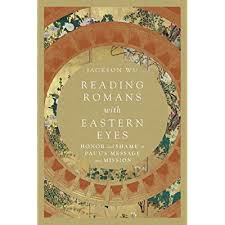
 God’s glory gets particular emphasis in this book. As the author says in his discussion of Romans 4:20-21, “Genuine faith in God magnifies his worth. By faith, we honor him” (48). In this vein Romans often focuses on how God deals with Jews and non-Jews, bringing them both into his family, to glorify him. A Jewish sense of superiority relegates God to a tribal deity. Therefore, “Romans contradicts the idea that ethnic conflict is a second-tier concern for the church” (65).
 How do I know?
  Here’s how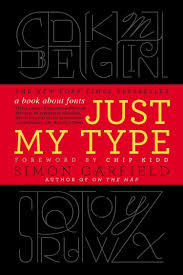
 And how could I have not known that the ampersand (&) is actually an elegant combination of the letters e and t which comprise the Latin word et, meaning “and”? I do now, & am a better person for it.
 For headlines and huge signs in public places—yes, by all means, give me Helvetica or Univers or Futura. These san serif faces are wonderful, authoritative and to the point. They get me where I want to go whether it is the exit, the entrance, or (most importantly) the men’s room.
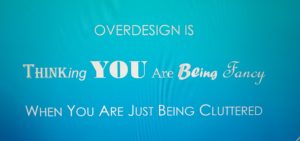 Having dozens or hundreds of options to choose from was just too much temptation for many. As an editor I often received manuscripts combining a riot of faces and fonts. What authors thought of as fancy or creative was plain distracting and ugly. Our friends at Apple and Microsoft had unleashed the untamed graphic designer in all of us.