
Dragons in the Bible? I can think of that red dragon in Revelation 12. But are there others?
In the outstanding Bible Project podcast series Chaos Dragons, Tim Mackie and Jon Collins explore the theme of monsters that surprisingly permeates the Bible from the first book to the last.
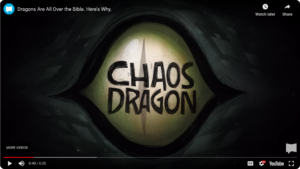 Chaos dragons are a common image in ancient near eastern literature, and the Bible writers take this and give it several twists for their own purposes. Such dragons often threaten humanity and the whole order God has created. They are associated with the disorder of the sea especially (see my blog here on that) but also of the wilderness. The Hebrew Bible uses a collection of related words (nahash, tanin, leviathan) to express this idea.
We remember leviathan from the book of Job which is in the sea (Job 41:1-4). Rahab is another such creature (Job 26:12; Is 27:1; 51:9). But we even find a reference on day five of creation—the “great sea creatures” (NIV, NASB) or “giant sea monsters” (CEV, NRSV) which translate tanin. Psalms 104 and 148 also use this word.
A connected image is the serpent itself from Genesis 3, seeking to undo the good order that God has created by deceiving the man and the woman. People can even take on dragonlike qualities. Pharoah is portrayed with these sorts of images in Ezekiel 29:3-4 (“great monster,” tanin). Even the scaly armor of Goliath (1 Sam 17:5) evokes this picture. Nebuchadnezzar is also described as a serpent or monster that swallows Israel (Jer 51:34). As the podcast series progresses, we hear the warning that if we are not careful, any of us can take on the role of a chaos creature.
 As Mackie and Collins discuss in their friendly style, these symbols represent a constellation of ideas which consider how dark forces of chaos are not the rival of God but the rival of God’s creation. Episode 1 gives an overview of the theme throughout the Bible (as does their brief video). The other episodes go into more detail about these various instances and many others.
As we move into the New Testament, the theme of crushing the snake underfoot first found in the Garden of Eden (Gen 3:15) is tied more explicitly to dark spiritual forces. In Luke 10:17-19 Jesus associates the disciples’ power over demons with the authority he has given them to tread on snakes. Likewise in Romans 16:20 Paul tells his readers that he looks forward to when God will “crush Satan under your feet.”
This worthwhile podcast series will add a valuable layer of depth and appreciation for an important theme that ties the story of the Bible together.

 While the differences in Bible versions can be confusing, it’s important to remember the advantages. It means we have a variety of translations well suited for different purposes–some for public reading, some for study, and others for devotional reading. In addition, if we come across phrases like “holy kiss,” “with . . . a double heart,” “make their ears heavy”—we may be left a bit befuddled. By comparing different translations, we can sometimes get a better sense of the range of meanings in a text. 40 Questions charts dozens of translations along a continuum to show how they each wrestle with the balance of accuracy and readability in different ways.
 My friends were somewhat surprised at this. They thought the text said what it meant. No more oceans.
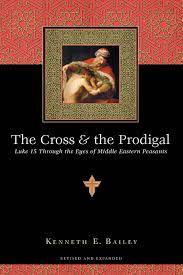
 Further, he acts as his own intermediary. Mediators are common in such cultures. Two people who are at odds do not confront each other directly lest one loose face. The father took this risk of rejection. Indeed, having been the grievously injured party, custom would require that the father wait and aloofly receive his groveling son—which is exactly what the son expects. The father again sets aside his honor for the prospect of joyful reconciliation.
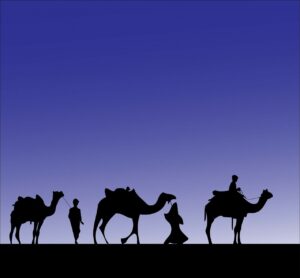 But why does “We Three Kings” mix the minor-like Aeolian key with a chorus that is major? Is it to give the carol a Middle Eastern flavor in light of the magi coming from the east? Perhaps.
 From a Western perspective, we might see patronage as creating unhealthy dependence, even being oppressive. But those inside see it as providing protection, meeting needs, giving security. Yes, it can be abused, but the problem then is not the system but the people in it.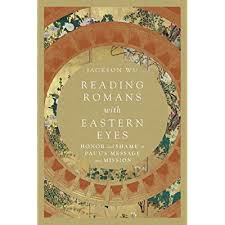
 God’s glory gets particular emphasis in this book. As the author says in his discussion of Romans 4:20-21, “Genuine faith in God magnifies his worth. By faith, we honor him” (48). In this vein Romans often focuses on how God deals with Jews and non-Jews, bringing them both into his family, to glorify him. A Jewish sense of superiority relegates God to a tribal deity. Therefore, “Romans contradicts the idea that ethnic conflict is a second-tier concern for the church” (65).