
One temptation writers face is to offer a big idea (or maybe just a moderate-sized idea) without any specifics or examples. We give broad, general advice or theories which may be valid but which may also numb minds. As readers, we may struggle to understand and to remember the point.
Our brains crave the specific. This principle is called moving from the general to the particular. Taking my own advice, then, let me give a concrete example.
Consider the advice to avoid clichés, those standard phrases or images that have become verbal wallpaper. It’s good advice. But can I make that advice more specific? Yes. Avoid worn-out phrases like, “I held her at arm’s length.” Now you have a better idea what I mean.
That, however, is still not detailed enough to understand how to implement the general idea of cliché avoiding. I need more. What can I do? I can add: when you spot such a phrase, delete it or turn it into plain language. Rewrite it as, “I started spending less time with her.”
 That, however, while valid, can be a bit dull. Here’s another strategy. Extend the metaphor embedded in the cliché. Again, good, general advice but can I give an example? Yes, I can.
Not I held her at arm’s length.
Better I held her at arm’s length wishing my arm were longer.
Now you understand much better what I mean. “Extend the metaphor” is theoretical and general. We have a hard time knowing exactly how to implement this excellent piece of advice when it stands alone. But with an example! Ahh! The mists of confusion disappear and the sun shines forth!
Moving the other way, from the particular to the general can work just as well. We start with a story about parents and children, or about bosses and employees, or about trees and squirrels. Then we draw a general principle from the tale.
Want to lock in understanding for your readers? The delight is in the details.
—
photo credit: Ryan McGuire, Pixabay
 Counterintuitively, limiting your audience can increase your readership. How? By making sure you go deeply into that narrow group. Writing successfully for all parents is hard because there are so many other resources and bestselling books already available. You might therefore get fewer readers for the broad audience than for the narrow one where there is less competition.
 Be alert, however, that not all graphic designers have the same training or experience. Someone expert at magazine covers or web pages may wrongly apply those design principles to a book page. They are not the same. Try to find someone who knows proper proportions for margins, line spacing (or leading), and so forth—for books.
 Unfortunately, the “singular they” has become so common that it is often used when it is just not necessary. Consider:
 Phase one is acquisition editing. An editor’s role here is to sign up authors to provide articles, blogs, books, or other written material. This is likely the first gatekeeper a writer encounters. Sometimes editors solicit pieces from writers they know, and sometimes writers come to editors with ideas. This phase has been jokingly (derisively?) referred to as “belly editing” for the legendary lunch meetings between editors and authors.
  The final phase is copyediting which deals with grammar, spelling, punctuation, house style, and format. Fact checking may arise here or perhaps at the line editing stage. Sometimes line editing and copyediting will be done simultaneously by a single person, collapsing these last two phases into one. After each stage authors are normally given opportunity to review the editing, respond to questions and suggestions, and to make further revisions.
 Bryan Stevenson’s

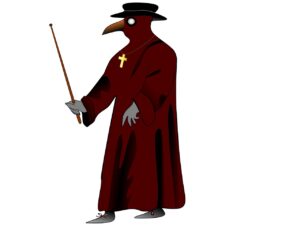 Early on a priest says he can make sense of it (as God’s judgment) though at the end his theology fails when he sees a small child die after prolonged suffering. A conman makes sense of it by taking advantage of the hardships of others only to revert to depression when the plague lifts. A writer plows ahead with his novel, day by day and month by month, yet never gets beyond the first sentence. A doctor seeks meaning by doggedly helping others even when his efforts often have little effect.
 Buy-In. David Logan, professor at the University of Southern California’s Marshall School of Business notes: “Asking for someone’s ‘buy-in’ says, ‘I have an idea. I didn’t involve you because I didn’t value you enough to discuss it with you. I want you to embrace it as if you were in on it from the beginning, because that would make me feel really good.’”
 It was a vaccine my grieving mother prayed for desperately, especially because her three other children, including me, were still vulnerable to the terrifying disease. Every year thousands of children across the United States were struck with it, peaking the year my sister died with over 57,000 cases, of whom 3,145 died.