Tomorrow, January 20, the United States will inaugurate its 46th president, Joe Biden. Given the contentious political year it has been, I thought it appropriate to repost my blog from February 8, 2019, about an important book by Republican Senator Ben Sasse (Nebraska) regarding the non-political reasons for our divides.
Why are Americans so at odds with each other? Why have so many people entrenched themselves in opposing camps, viciously vilifying each other? What has turned us into a nation of Us vs. Them?
Is cable news responsible? Did the Russians do it? Does it go back to Newt Gingrich or the Robert Bork confirmation?
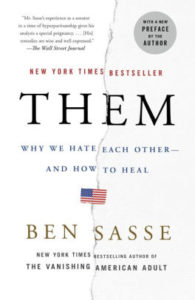 In his book, Them, Senator Ben Sasse has a very unpolitical answer. It’s because, he says, we are lonely. We have fewer friends. We are more disconnected from our communities. So we grasp for a group to feel part of, to identify with. More and more that manifests itself in our political and social identities.
Since World War II single-person households have tripled to 26 percent. Technology has also pushed us into self-reinforcing corners where we just don’t encounter people as people who might have differing views. Other significant factors are at work as well.
Yes, cable news and radio talk showmen and show women have taken advantage of our situation. And yes, the Russians have fanned the flames too with more than 50,000 Russian-linked Twitter accounts fueling outrage by sending automated messages on both sides of issues. But these only feed on a pre-existing condition.
What’s the cure for our illness? The last half of the book offers several worthwhile remedies, from setting tech limits in our personal lives to building into a neighborhood or community to re-educating ourselves on how democracy works and what it stands for.
Sasse regularly says the book is not political in the sense of party politics or hot-button issues. He is right. The book is social and personal. When he does touch on political examples, he is to be commended for being very evenhanded–criticizing and praising as appropriate both right and left, both politicians and journalists, both Republicans and Democrats. Sasse models how we can treat each other as human beings, as fellow Americans who deserve our listening ear and our respect.
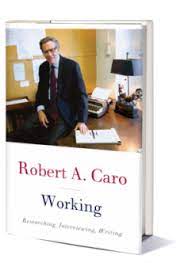
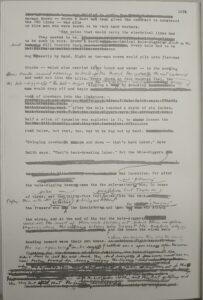 Caro’s other passion is explaining how political power works because it has a tremendous effect on our lives. Robert Moses was determined to reshape New York City with bridges, highways, parks, and other public works. To do so, during his forty years in power, Moses displaced a half million of New York’s fourteen million people—forcing them out of their homes, destroying communities. In a democracy, Caro wants us to know how that kind of power (of an unelected official) works.
 Why? We live in a world that often seems so random and chaotic. None of us knows who will get cancer next, be in a car accident, or where the next war will break out. Experts famously fail in making such predictions. We can increase the odds of living a healthy life, but we have no guarantees.
 One exception is reading. One tool I’ve found that helps keep me making progress is the Goodreads Reading Challenge.
  In recent years I’ve aimed at about fifty, and I’ve hit that target. This year I only read forty. That’s no cause to beat myself up. I’m sure I’ve been reading more than I would have otherwise just because that target is out there.
 A few days later, when Mary and Joseph present the infant Jesus in the temple, they were met by an old man named Simeon. God had promised him he’d see the Messiah before he died. When he saw the trio he took Jesus in his arms and said:
 Advice That’s Out of This World
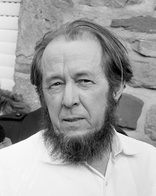 Throughout the book Niebuhr is a penetrating critic of communism’s flaws and failings, saying, for example, “Communism is a vivid object lesson in the monstrous consequences of moral complacency about the relation of dubious means to supposedly good ends” (p. 5). Yet he is also clear-eyed about how the American experiment can go haywire.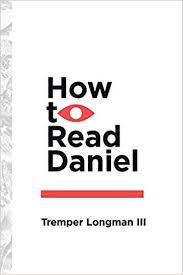
 His final two chapters are especially valuable on how to read Daniel as 21st-century Christians in hostile cultures. He notes there is no “one-size-fits-all formula for how . . . to interact with powerful forces that are not friendly to our religious values.” Sometimes Daniel and his friends respond only in private and sometimes in public. Sometimes they seek to persuade rather than confront. “The one thing that is clear and consistent is that they do not go out of their way to offend the authorities” (148). Instead they use wisdom and civility while remaining faithful in difficult circumstances.
 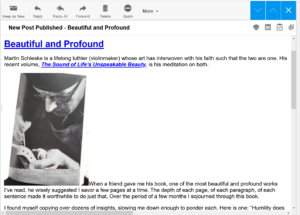 Some of you who subscribe to Andy Unedited have mentioned that the font size is small in the email alert you receive. If you just click on the headline of the blog found in the email, you will be sent to the blog website which is much more readable. (So, for example, if you get this in an email, put your cursor on “Tuesday Round Up” in the email and then click! Easy as eating pumpkin pie.)
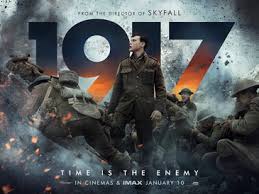 My wife and I recently rented the DVD of this gripping story of two British soldiers in World War I who make an amazing 24-hour journey to deliver a message that could save hundreds of lives. The unusual use of only one camera during the entire film heightens not only the immersive immediacy of the movie but the dogged courage of this pair.