
Should authors blog through the books they are writing? This does not have a one-size-fits-all answer.
I wish I could have said a bit more about it in Write Better where careful readers may have thought they spotted a contradiction. In the preface I say, “Some of what is found in this book was originally posted [at Andy Unedited], though now in a much revised and expanded form.” Much later in appendix A I say, “Don’t give too much of your book away in a blog or web page.”
Did I break my own guideline? You decide. But first let me back up.
 Blogging can be good for many reasons. It can help gain an audience for your writing. Blogging regularly can get you in the habit of writing and thus minimize writer’s block. It can also help you practice and improve your craft.
Most bloggers will naturally find themselves gravitating to certain topics over and over. This might trigger a thought that one or more of the topics could become one or more books.
If you start seriously working on such a book, I do not recommend you serialize your book in your blog. That does give away too much content. Now some might get the book anyway because they are your mother. But serializing for free can diminish the value a book that you expect people to pay for.
At the same time, you do want readers to associate you with certain topics. You want to build a reputation as someone who has valuable things to say in specific areas. It is fine then to put preliminary thoughts and ideas related to your book topic in your blog. Here’s a chance to be experimental, to see what works for you and for your audience. Some of these posts may make it into the book in another form. Most should not.
 If it turns out that a lot of your book ends up to be taken directly from your blog posts, you might want to consider removing many (not all) of those posts from your blog site shortly before the book is published.
Another guideline is this: the less popular your blog, the more freedom you have to put whatever you want on your blog. If you are already a well-known author, the less you should blog material that might end up in your book. You can and should still do some to pique interest and build anticipation. But not a lot.
And me? I gladly do not consider myself famous. My blog has a modest following. In any case, I worked hard to create a lot of new content just for Write Better. But because I am not competing with Justin Bieber for social media hits, I felt more free to have some overlap between my blog and my book. For whatever reasons, my books have done better than my blog. And I’m not unhappy it has turned out that way.
—
photo credit: pixelcreatures, Pixabay
 We have all become very attuned to how things look. Our design sensitivities have been heightened in recent decades. Apple has probably had as much to do with this as anything with the beautiful minimalism that distinguishes its products. So, yes, a blog or website has to have a certain level of sophistication and eye appeal. But it doesn’t have to be expensive or over the top.
 From a Western perspective, we might see patronage as creating unhealthy dependence, even being oppressive. But those inside see it as providing protection, meeting needs, giving security. Yes, it can be abused, but the problem then is not the system but the people in it.
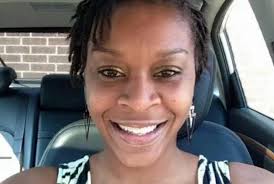 Gladwell begins and ends the book with the story of Sandra Bland, the 28-year-old African American who in 2015 was stopped for a minor traffic infraction, arrested, and committed suicide in jail three days later. He methodically unpacks the recorded July 10 encounter with State Trooper Brian Encinia.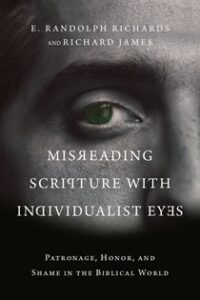
 After some time, and having wasted everything, he is destitute and starving. In desperation he decides to return to his father, thinking to make an abject apology and ask for mercy.
  Normally I don’t suggest self-editing before we start drafting. That can often shut down our flow. Unless you usually find yourself writing 3,000 words for every 1,000 assigned, it’s best to cut afterward. But how? A few things come to mind.
 Fourth, in nonfiction you will often have main points. Sometimes you’ll have subpoints as well. But if you find you have sub-subpoints, those are likely candidates to ax.
  1. Read more. All the books were waiting that I’ve wanted to get to that I hadn’t had time for.
 My wife, Phyllis, needed to do it differently. She is such an activist I suggested she not make a plan or any long-term commitments for a year. Otherwise she would fill up her schedule without a clear sense of priorities. And I knew she would have plenty to do during that year, but she needed to organically see what her new rhythm of life would be. So she did. She spent the year continuing to be active with friends, family, discussion groups, and service opportunities. But no big plans.
 That might not even solve all your problems. After all, sending a message into the future can be a tricky business. What could make sure that it didn’t degrade as it passed through the space-time continuum? The technology could break down. Human error or human limitations could prevent the message from being transmitted. And because language and culture change significantly over time, our words and syntax could be difficult to understand by those in the future.
 Writing and reading are so commonplace we forget how almost magical the whole process is. We can receive and send ordinary and exceptional stories as well as knowledge across thousands of miles and hundreds of years with people we have never met and who may not know our language.