
Recently a friend asked an interesting question after reading my blog on writer’s block. He wrote:
Andy,
I wonder if I need some writer’s block. I don’t have a problem with getting started. Rather, as I jokingly tell students, I’ve never met a word count I couldn’t exceed. I am working on my first solo, non-academic book for a Christian audience. In each chapter, I’ve stuffed in all sorts of things that I think are useful to know about the topic. That is giving me 4000-6000 word chapters, which I’m told is much too long. I need a tool for discerning what pieces I can safely leave out without losing my authorial voice. Any recommendations for that??? Thanks.
Prolific in Pittsburgh
It’s a great question. I have met a few other authors with “reverse writer’s block.” They know they should write less (or have been told to write less by an editor) but can’t seem to stop or keep the word count down.
 Normally I don’t suggest self-editing before we start drafting. That can often shut down our flow. Unless you usually find yourself writing 3,000 words for every 1,000 assigned, it’s best to cut afterward. But how? A few things come to mind.
First, expect cutting to be painful. It will hurt because you believe in all your content. Don’t think you can do it without some anguish. If you don’t feel pain you probably aren’t cutting enough. Don’t expect to achieve what you want by deleting a word here or there. Whole sentences and paragraphs will have to go. Probably whole sections.
Second, save what you cut in a separate file. Maybe you can use it later for some other purpose. That could ease the pain a bit, knowing that your hard work is not forever banished to a digital netherworld. Remember: You don’t have to put everything possible into a piece. You can always write another book or article.
Third, when in doubt, throw it out. If the thought crosses your mind, “I wonder if this should go,” that is a likely candidate. Highlight it and everything else you think could be cut. Then see how many words you have left. If you are under the target word count, then you can reinstate some of your gems.
 Fourth, in nonfiction you will often have main points. Sometimes you’ll have subpoints as well. But if you find you have sub-subpoints, those are likely candidates to ax.
Fifth, get a neutral party or two to give you input on what to cut. It should be people you trust and will listen to. It’s not fair to have them spend time reading your draft only to have you ignore most of what they say.
Two kinds of readers can be helpful. One is a person with significant writing or editing experience. Another type is someone in the target audience—your average reader. Have such people mark where their attention lagged or what they skipped over.
Finally, remember that after you make your cuts, your piece will almost always be better. Readers will remember more, and your prose will be stronger. Believe it. It’s true.
—
credits: Pixabay stevepb (axe); Pixabay lograstudio (sleeping)
 1. Read more. All the books were waiting that I’ve wanted to get to that I hadn’t had time for.
 My wife, Phyllis, needed to do it differently. She is such an activist I suggested she not make a plan or any long-term commitments for a year. Otherwise she would fill up her schedule without a clear sense of priorities. And I knew she would have plenty to do during that year, but she needed to organically see what her new rhythm of life would be. So she did. She spent the year continuing to be active with friends, family, discussion groups, and service opportunities. But no big plans.
 That might not even solve all your problems. After all, sending a message into the future can be a tricky business. What could make sure that it didn’t degrade as it passed through the space-time continuum? The technology could break down. Human error or human limitations could prevent the message from being transmitted. And because language and culture change significantly over time, our words and syntax could be difficult to understand by those in the future.
 Writing and reading are so commonplace we forget how almost magical the whole process is. We can receive and send ordinary and exceptional stories as well as knowledge across thousands of miles and hundreds of years with people we have never met and who may not know our language.

 1. Get
  4. Play
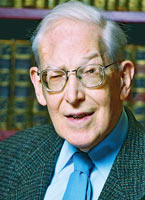 Once I recall him talking about his concise writing style. “Packer by name; packer by trade,” he responded. I could tell he enjoyed saying that, and I got the impression he used the line often.
  Once several of us took him to lunch, and as we ate IVP publisher Bob Fryling posed the question, “How would you describe IVP among the many Christian publishers that are around?”
 Such was the power of Coleridge’s personality and intellect that even in the midst of his deep struggles he reshaped the way the world saw Shakespeare in a series of landmark lectures. Previously the Bard was viewed as a second-tier talent of popular leanings. After Coleridge we know him to be the premier wielder of not only the English language but of art and life.
  You can probably rewrite 90% of these sentences in active voice. For example,
 Weak: The reason is because Facebook is trying to suck all the DNA out of my body.