For many, the work of editors can seem mysterious, if not a bit intimidating. As writers we know they hold the power to get us published, but we have little idea how the process works.
One doorway into this mystery is the four phases of editing. All four phases can be handled by a single person, or each phase may be carried out by a different editor. Then at times a writer will work with two or three editors on a single project. It often depends on the size and structure of the publisher.
 Phase one is acquisition editing. An editor’s role here is to sign up authors to provide articles, blogs, books, or other written material. This is likely the first gatekeeper a writer encounters. Sometimes editors solicit pieces from writers they know, and sometimes writers come to editors with ideas. This phase has been jokingly (derisively?) referred to as “belly editing” for the legendary lunch meetings between editors and authors.
Phase two is developmental editing which involves guiding and coaching authors as they begin to write and shape manuscripts as well as when it comes to making major revisions. While an acquisitions editor may also do the developmental work, sometimes the manuscript is handed off to another person. At this stage larger questions of structure, tone, and audience are in view. For fiction, character development and plot are the focus. For nonfiction, presentation and persuasion are foremost.
Once the development editor and the author are largely in agreement about the revised manuscript, phase three begins: line editing. Here the editor concentrates on the sentence level, centering on awkward phrasing, clutter, stylistic issues, and word choice. Your development editor may also handle the line editing phase, but probably not the acquisitions editor unless there’s only one or two people in the whole department.
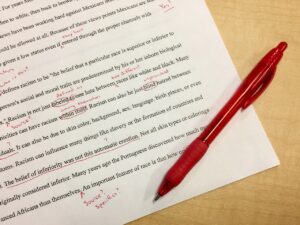 The final phase is copyediting which deals with grammar, spelling, punctuation, house style, and format. Fact checking may arise here or perhaps at the line editing stage. Sometimes line editing and copyediting will be done simultaneously by a single person, collapsing these last two phases into one. After each stage authors are normally given opportunity to review the editing, respond to questions and suggestions, and to make further revisions.
What are the priorities and concerns of editors in each phase? That is a topic for other blog posts. To get you started, however, I offer some ideas about how editors and agents think in Appendix B of Write Better.
In general, remember all editors in all phases of editing care about good writing, good ideas, and finding readers. In that regard, we are all on the same team.
—
photos: restaurant (Life-Of-Pix, Pixabay); manuscript (annekarakash; Pixabay)
 Bryan Stevenson’s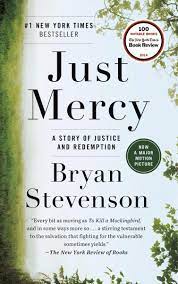

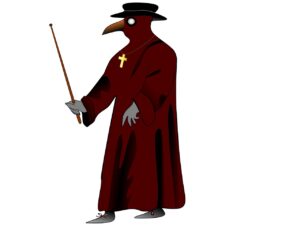 Early on a priest says he can make sense of it (as God’s judgment) though at the end his theology fails when he sees a small child die after prolonged suffering. A conman makes sense of it by taking advantage of the hardships of others only to revert to depression when the plague lifts. A writer plows ahead with his novel, day by day and month by month, yet never gets beyond the first sentence. A doctor seeks meaning by doggedly helping others even when his efforts often have little effect.
 Buy-In. David Logan, professor at the University of Southern California’s Marshall School of Business notes: “Asking for someone’s ‘buy-in’ says, ‘I have an idea. I didn’t involve you because I didn’t value you enough to discuss it with you. I want you to embrace it as if you were in on it from the beginning, because that would make me feel really good.’”
 It was a vaccine my grieving mother prayed for desperately, especially because her three other children, including me, were still vulnerable to the terrifying disease. Every year thousands of children across the United States were struck with it, peaking the year my sister died with over 57,000 cases, of whom 3,145 died.
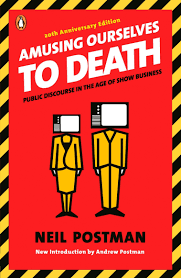
 In the introduction for the twentieth-anniversary edition of book, Postman’s son points out that though we are not dominated by network television anymore, the underlying issues of our entertainment-saturated culture remain the same. Has media improved our democracy? Has it made our leaders more accountable? Are we better citizens or are we better consumers? Have our schools improved as a result?
 A colleague, Jim Hoover, often said, “An editor is the author’s advocate to the reader—and the reader’s advocate to the author.” The job of editors is not to shape manuscripts the way they would write them. Rather when alerting authors to potential problems, editors aim to show authors what questions people might raise the first time they read the text. That is just virtually impossible for authors to do who are overly familiar with what they’ve written. “Isn’t it obvious?” No. Not always.