
Our eyes are riveted to news updates about earthquakes, wars, and shootings, even though so much of it is depressing. But there can be other negative side effects.
 Twenty-five years ago, Christine Pohl wrote, “News reports and documentaries broadcast the most terrible details of the lives of refugees or famine victims thousands of miles away, and regularly bring their faces and stories into the most intimate spaces of our homes.”
This, she says, can have two unintended but related effects. “A steady exposure to distant human need that is beyond our personal response can gradually inoculate us against particular action. It can also dilute us into thinking that by simply knowing about it we are somehow sharing in the suffering of others. Isolation from local need, and over exposure to overwhelming but distant need, make our responses to strangers uncertain and tentative at best.”*
What can we do to not become numb to those in need nearby or far away? One obvious option is to stop following the news, or at least to consume much less (for this and other reasons discussed here).
 But then how would I know where to contribute when a crisis arises? Simply by giving to a relief organization you trust on a regular basis, regardless of whether or not there is a special need. Such crises, sadly, happen often. Send your gift to someone like the Red Cross, World Relief, Doctors Without Borders, or World Vision and designate it to “where needed most.”
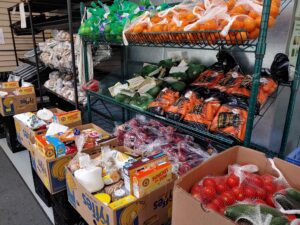
Volunteering locally can also keep us from going numb. Tutoring, helping at a homeless shelter, and many other options are easy to find through your church, your library, or a quick web search. A neighbor recently joined me regularly at a food pantry, and she loves it.
Rather than constantly watching the news, these opportunities can put us in direct contact with people who need help and at the same time keep our hearts warm.
*Christine Pohl, Making Room (Grand Rapids, MI: Eerdmans, 1999), p. 91.
Photo credits: Andrew T. Le Peau
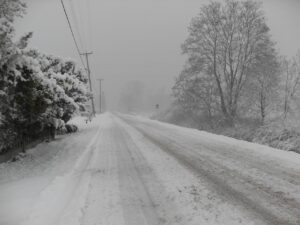 With the blizzard still raging, our car was eventually able to limp to a nearby exit for a small town where Phyllis and I sheltered in a restaurant with our four young children, all of us dazed and uncertain what to do. As we were standing there among dozens of other stranded motorists, we heard rumors that the town was going to open up the local high school gym so people would have a place to stay that cold winter night.
 I could hardly believe it. We were the ones in need. We were the ones who had been helped, but somehow they were the ones who were blessed.
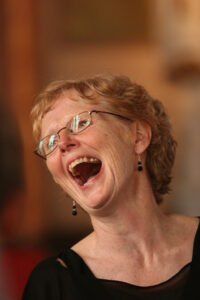
 Phyllis didn’t show her concern only when people were overtly hurting. She took delight in getting to know everyone she encountered—on a bus, standing in line, sitting in a park. Because of her genuine interest and ready laugh, they were quite willing to engage her in conversation. People just felt better about life and themselves after being with Phyllis.
 In addition, she began giving more focused attention to an elderly widow who lived on our block. She played board games with her and brought over meals once a week or more.
 Then Cooper said, “Can I ask a question? Do you feel you are entitled to the truth?”
 But why does “We Three Kings” mix the minor-like Aeolian key with a chorus that is major? Is it to give the carol a Middle Eastern flavor in light of the magi coming from the east? Perhaps.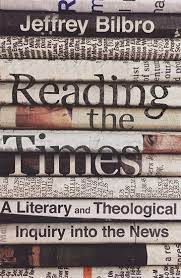
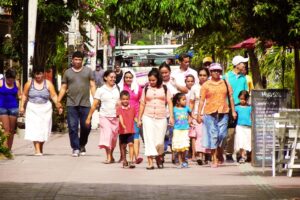 In this way Bilbro offers more ways forward than Postman. “Instead of allowing the news to create our communities, Christians should seek to help their communities create the news.” This can begin with the simple act of walking our neighborhoods rather than isolating ourselves in cars or behind screens. On another level we can, for example, pursue redemptive publishing by reading, he suggests, things like Civil Eats, American Conservative, The Atlantic, Commonweal, Hedgehog Review and more.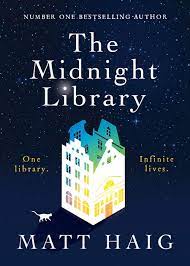
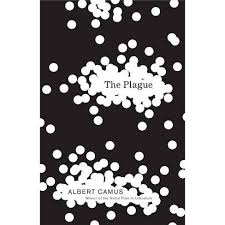
 Early on a priest says he can make sense of it (as God’s judgment) though at the end his theology fails when he sees a small child die after prolonged suffering. A conman makes sense of it by taking advantage of the hardships of others only to revert to depression when the plague lifts. A writer plows ahead with his novel, day by day and month by month, yet never gets beyond the first sentence. A doctor seeks meaning by doggedly helping others even when his efforts often have little effect.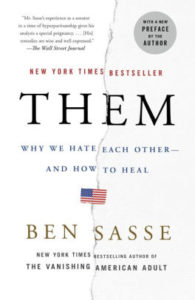
 Why? We live in a world that often seems so random and chaotic. None of us knows who will get cancer next, be in a car accident, or where the next war will break out. Experts famously fail in making such predictions. We can increase the odds of living a healthy life, but we have no guarantees.