
NCIS is a predictable TV crime series that has just launched its eighteenth season. We usually start with a dead body. Because the death is connected to the Navy, the Naval Criminal Investigative Service (NCIS) team (led by Special Agent Jethro Gibbs played by Mark Harmon) grabs their gear and solves the crime.
High level technical analysis of DNA, chemicals, cell phone usage, facial recognition, and bank accounts lead them to the killer. One or two obvious, but ultimately innocent, suspects are thrown in to throw us off track. They rarely do. Quirky conversations among the team members give it a light accent. It’s all very formulaic. And I love it.
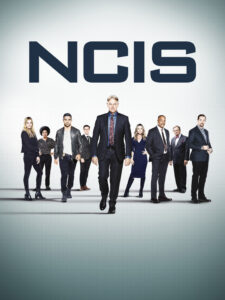 Why? We live in a world that often seems so random and chaotic. None of us knows who will get cancer next, be in a car accident, or where the next war will break out. Experts famously fail in making such predictions. We can increase the odds of living a healthy life, but we have no guarantees.
NCIS offers a different message. It tells us that the world has order. One of Gibbs’s famous rules, in fact, is “There are no coincidences.” We can know the truth. It takes hard work, hard science, teamwork, and intuition, but we can find it.
Some criticize crime procedurals like NCIS for more than their lack of artistic merit. As Helen Lewis notes, “In his book Homicide, David Simon argues that crime procedurals have created an expectation among juries that a trial will present them with a clear motive, a logical sequence of events, and some slam-dunk evidence for good measure. Many are surprised to find that real life is rarely so generous.”
Despite its shortcomings, NCIS has one more important message that I need to hear, that we need to hear: Justice exists and it is worth fighting for. Right and wrong are real, and we can successfully fight the wrong and work for the right. We may have setbacks and it may be complicated, but we can get there. And even if we don’t, it is right to try.
Yes, for me NCIS is a guilty pleasure, but I don’t feel too guilty.
 One exception is reading. One tool I’ve found that helps keep me making progress is the Goodreads Reading Challenge.
  In recent years I’ve aimed at about fifty, and I’ve hit that target. This year I only read forty. That’s no cause to beat myself up. I’m sure I’ve been reading more than I would have otherwise just because that target is out there.
 A few days later, when Mary and Joseph present the infant Jesus in the temple, they were met by an old man named Simeon. God had promised him he’d see the Messiah before he died. When he saw the trio he took Jesus in his arms and said:
 Advice That’s Out of This World
 Throughout the book Niebuhr is a penetrating critic of communism’s flaws and failings, saying, for example, “Communism is a vivid object lesson in the monstrous consequences of moral complacency about the relation of dubious means to supposedly good ends” (p. 5). Yet he is also clear-eyed about how the American experiment can go haywire.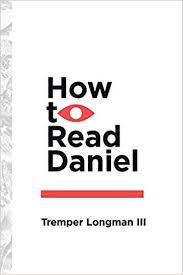
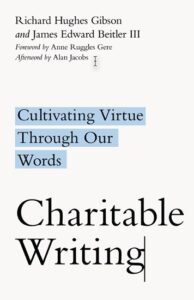
 His final two chapters are especially valuable on how to read Daniel as 21st-century Christians in hostile cultures. He notes there is no “one-size-fits-all formula for how . . . to interact with powerful forces that are not friendly to our religious values.” Sometimes Daniel and his friends respond only in private and sometimes in public. Sometimes they seek to persuade rather than confront. “The one thing that is clear and consistent is that they do not go out of their way to offend the authorities” (148). Instead they use wisdom and civility while remaining faithful in difficult circumstances.
  Some of you who subscribe to Andy Unedited have mentioned that the font size is small in the email alert you receive. If you just click on the headline of the blog found in the email, you will be sent to the blog website which is much more readable. (So, for example, if you get this in an email, put your cursor on “Tuesday Round Up” in the email and then click! Easy as eating pumpkin pie.)
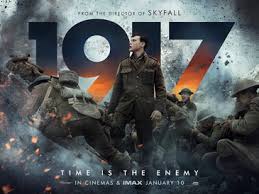 My wife and I recently rented the DVD of this gripping story of two British soldiers in World War I who make an amazing 24-hour journey to deliver a message that could save hundreds of lives. The unusual use of only one camera during the entire film heightens not only the immersive immediacy of the movie but the dogged courage of this pair.

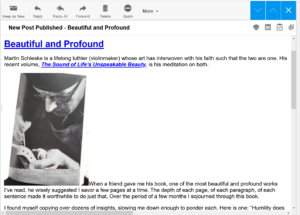
 When a friend gave me his book, one of the most beautiful and profound works I’ve read, he wisely suggested I savor a few pages at a time. The depth of each page, of each paragraph, of each sentence made it worthwhile to do just that. Over the period of a few months I sojourned through this book.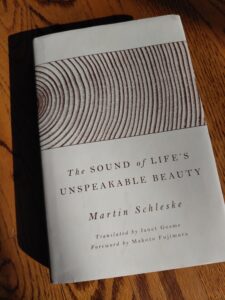
 And what is the difference between giftables and gifts? Two extraneous syllables and four unnecessary letters! What could possibly justify creating a gratuitous adjective just to make it into a noun? And don’t get me started on using too many exclamation points!