
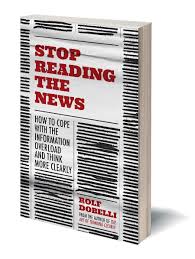
After re-reading Neil Postman’s Amusing Ourselves to Death, I thought about taking a 24-hour fast from media. No TV, no radio, no smart phone, no laptop–for a whole day. Then I remembered it’s winter here in Chicago and weather forecasts are nearly a prerequisite for citizenship. And I’m expecting important emails soon. And what about those text messages I’d miss? And . . .
And I realized that though I think I control my technology, maybe it controls me as much as the next guy.
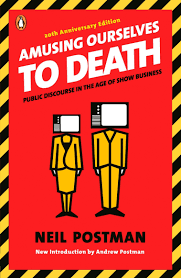 When Postman wrote his book in 1985, Pac-Man was five years old. USA Today was three. The Mac computer was one. Cable TV was in its infancy. Google was twelve years into the future. Netflix wouldn’t open for business for fourteen years. We’d have to wait twenty-two years for the iPhone and Kindle. Despite this or perhaps because of this Amusing Ourselves to Death is a classic that remains as important as ever.
The problem is that such media have created an entertainment culture, and all the new technologies have only reinforced that. What have we lost? The substance of public discourse that a print culture offered us in the previous centuries. Thousands heard Lincoln and Douglas debate in three- and four-hour-long sessions. But it was the dominance of print that made it possible for listeners to be able to follow and to be interested in these events.
Our civic life has been consumed by sound bites and Twitter feeds, reducing millions to passive consumers of media instead of active citizens. Even those outlets that are supposed to provide substance are mostly focused on capturing audiences. MSNBC and FOX have more in common than we think for neither are in the news business. Rather both are trying to make as much money as possible in the entertainment business.
 In the introduction for the twentieth-anniversary edition of book, Postman’s son points out that though we are not dominated by network television anymore, the underlying issues of our entertainment-saturated culture remain the same. Has media improved our democracy? Has it made our leaders more accountable? Are we better citizens or are we better consumers? Have our schools improved as a result?
Solutions? Postman admits he has few. Certainly recognizing our disease is a necessary step. Asking questions about media is also needed to break the spell technology has over us. So are periodic fasts such as technology-free family nights once a week or even once a month. We must start somewhere. And reading Postman’s book can be just the place to begin.
 A colleague, Jim Hoover, often said, “An editor is the author’s advocate to the reader—and the reader’s advocate to the author.” The job of editors is not to shape manuscripts the way they would write them. Rather when alerting authors to potential problems, editors aim to show authors what questions people might raise the first time they read the text. That is just virtually impossible for authors to do who are overly familiar with what they’ve written. “Isn’t it obvious?” No. Not always.

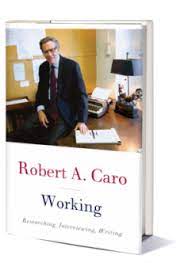
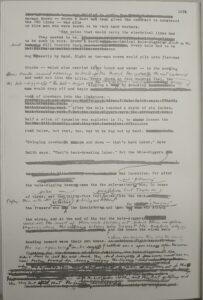 Caro’s other passion is explaining how political power works because it has a tremendous effect on our lives. Robert Moses was determined to reshape New York City with bridges, highways, parks, and other public works. To do so, during his forty years in power, Moses displaced a half million of New York’s fourteen million people—forcing them out of their homes, destroying communities. In a democracy, Caro wants us to know how that kind of power (of an unelected official) works.
 Why? We live in a world that often seems so random and chaotic. None of us knows who will get cancer next, be in a car accident, or where the next war will break out. Experts famously fail in making such predictions. We can increase the odds of living a healthy life, but we have no guarantees.
 One exception is reading. One tool I’ve found that helps keep me making progress is the Goodreads Reading Challenge.
  In recent years I’ve aimed at about fifty, and I’ve hit that target. This year I only read forty. That’s no cause to beat myself up. I’m sure I’ve been reading more than I would have otherwise just because that target is out there.
 A few days later, when Mary and Joseph present the infant Jesus in the temple, they were met by an old man named Simeon. God had promised him he’d see the Messiah before he died. When he saw the trio he took Jesus in his arms and said: